 Add Preferred News Source

2 Min. Read• 1,056 Views
Cabinet Approves ₹11,000 Crore Construction Equipment Scheme with 8-13% Incentives for Indian Manufacturers
Summary
The Union Cabinet has approved an ₹11,000-crore scheme to strengthen India's construction and infrastructure equipment manufacturing ecosystem. The eight-year programme will provide sales-linked incentives of 8% to 13% to eligible manufacturers and support a dedicated testing facility.
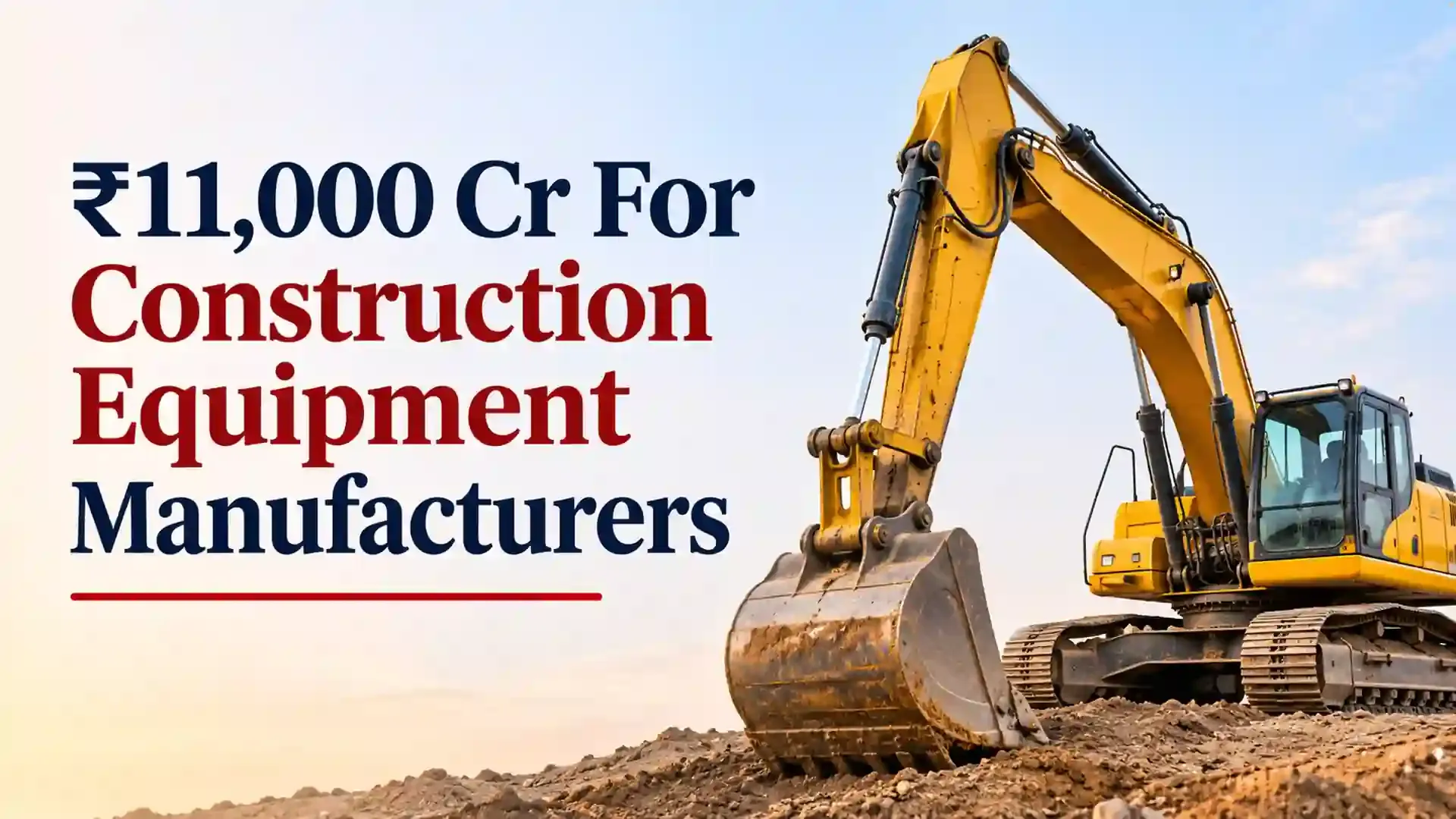
The Union Cabinet has approved an ₹11,000-crore scheme to strengthen domestic manufacturing of construction and infrastructure equipment (CIE), including specialised machinery used in large infrastructure projects. The programme is aimed at reducing dependence on imported equipment and developing India's own manufacturing capabilities.
Which Equipment Categories Will the Scheme Cover?
The scheme focuses on seven categories of equipment that are currently fully or substantially dependent on imports. These include tunnel-boring machines (TBMs), off-highway trucks, hydraulic excavators, cranes, loaders, piling rigs and drilling machines.
The government also intends to support the domestic production of technologically advanced equipment such as ship-to-shore cranes. Alongside complete machinery, the programme will cover components required by equipment manufacturers, with the aim of strengthening the wider supply chain.
A dedicated testing facility is another part of the initiative. This is intended to provide domestic testing infrastructure for construction and infrastructure equipment, supporting manufacturers in developing and validating their products within the country.
Which Companies Are Likely to Benefit?
India's construction and infrastructure equipment industry had a market size of around ₹97,500 crore in FY2024-25, making it the world's third-largest market after China and the United States.
The government expects the domestic market to more than double to approximately ₹2.28 lakh crore by FY2029-30. Growth is expected to be supported by investment in roads, ports, housing and other infrastructure projects.
BEML is one of the Indian companies already working towards domestic tunnel-boring machine development. The state-owned company plans to initially manufacture smaller machines with diameters ranging from 3.5 metres to 6.5 metres. These machines could be used in metro rail, hydropower, irrigation and water projects.
Escorts Kubota is another major player in the sector that will aim to qualify for the incentives.
How Will Manufacturers Receive Financial Incentives?
The programme has two components. The first is a sales-linked incentive for eligible original equipment manufacturers (OEMs) and component manufacturers. The incentive rates will range from 8% to 13% of incremental sales over a five-year period. Incremental sales will be calculated against a prescribed base year.
The second component provides a grant of up to ₹375 crore for establishing a dedicated CIE testing facility. The grant will be provided as viability gap funding, which is financial assistance intended to make a project commercially feasible.
The scheme will run for a span of eight years, from FY2026-27 to FY2033-34. The first two years will serve as a gestation period for manufacturers to establish facilities. Incentive disbursements will take place over the following five years, from FY2028-29 to FY2032-33. The final year will be used to settle incentives based on incremental sales recorded in FY2032-33.
Also Read - Schaeffler India Block Deal: Parent Schaeffler AG Plans 6% Stake Sale Worth ₹3,188 Crore at 5.6% Discount
This article is for informational purposes only and should not be considered investment advice from Kotak Neo. For compliance T&C and disclaimers, Visit www.kotakneo.com/disclaimer
About the Author

Vishwa Ved
Vishwa has spent 10+ years across fintech and FMCG doing what most people miss, connecting the dots, catching trends before they trend, and finding the angle nobody else thought to ask about.
At Kotak Neo, she drives content strategy for neoshorts, Kotak News Desk, and Investing Guide, turning market noise into something worth reading.
When she's not decoding markets, she trades charts for canvases, chasing art, painting, and architecture across cities she's yet to explore.
Right Tools, Rich Insights

Latest News
- 2 Min. Read• 1,055 Views
- 2 Min. Read• 1,059 Views
- 2.5 Min. Read• 1,089 Views
- 2 Min. Read• 1,094 Views
- 2.5 Min. Read• 1,029 Views
- 2.5 Min. Read• 1,010 Views
- 2.5 Min. Read• 1,084 Views
- 3 Min. Read• 1,067 Views
- 2 Min. Read• 1,051 Views