SIAM Withdraws Fuel Quality Letter, Reaffirms Support For E20 Rollout
 Add Preferred News Source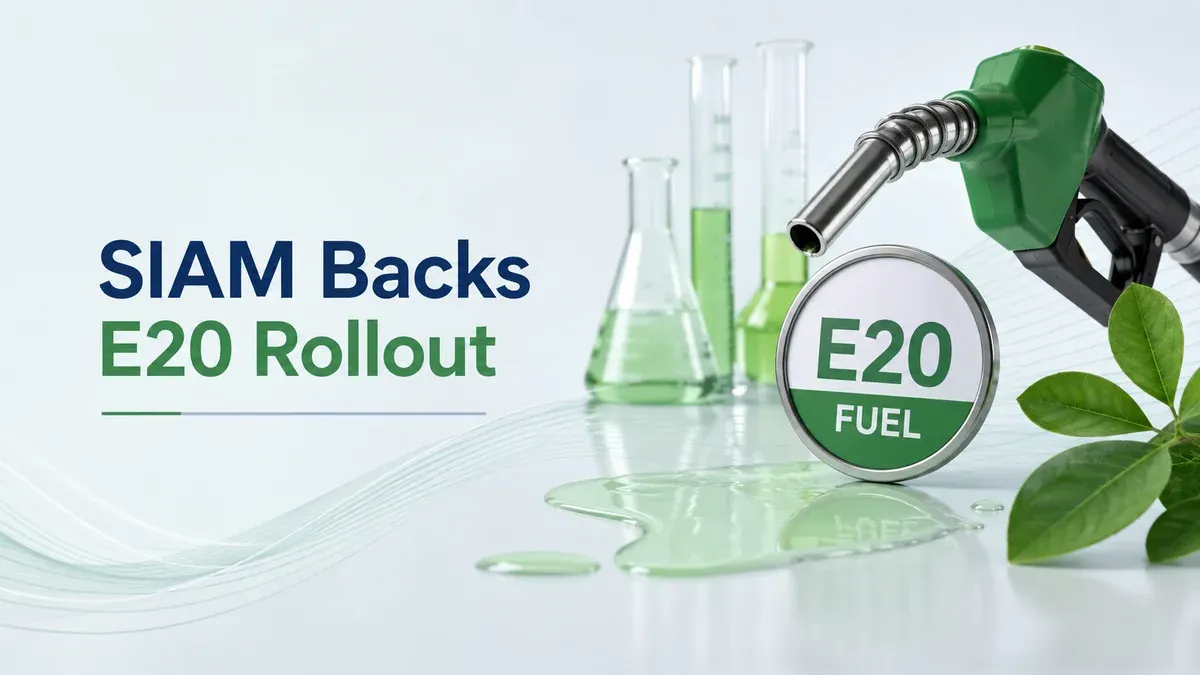
SIAM withdrew its earlier fuel quality communication, reaffirmed support for the E20 programme and said existing testing standards are adequate, while the government defended nationwide fuel quality checks.
The Society of Indian Automobile Manufacturers (SIAM) has withdrawn its earlier communication on fuel quality concerns, saying media reports based on selective excerpts did not reflect the full context of its discussions with stakeholders.
The clarification comes after reports suggested the industry body had raised concerns with the government over rising chloride contamination and moisture levels in E20 petrol, warning of possible damage to engine and exhaust components.
SIAM Says No Cause For Concern
In a statement issued on Tuesday, SIAM said the communication was part of routine technical discussions held between automobile manufacturers, oil marketing companies (OMCs), testing agencies and other industry stakeholders.
The industry body stressed that India's fuel quality monitoring system remains robust, with more than 150 parameters being tested regularly under the existing regulatory framework.
SIAM also said the data referenced in its earlier communication was preliminary and required validation through wider data collection and consultation with member companies before any conclusions could be drawn.
As a result, it has withdrawn the communication and urged stakeholders not to interpret the figures in isolation.
Backs Government's E20 Programme
Reiterating its support for ethanol-blended fuel, SIAM said the automobile industry remains fully committed to the Government of India's E20 initiative, describing it as an important step towards improving the country's energy security.
The industry body added that there was "no cause for concern" over E20 fuel quality and noted that technical discussions between vehicle manufacturers and oil companies have been a routine part of the industry for decades.
SIAM also pointed out that the Ministry of Petroleum and Natural Gas has already prescribed a precautionary limit of 3 parts per million (ppm) for chloride and sulphur in ethanol supplied for blending, saying the existing norms adequately meet the automobile industry's requirements.
Government Highlights Stronger Fuel Checks
The clarification follows a statement from the petroleum ministry, which said fuel quality surveillance has been strengthened across the country.
According to the ministry, oil marketing companies now conduct water ingress checks 8 to 12 times a day at more than 87,000 fuel stations. It also said over 2,000 fuel samples had been tested for chloride and sulphide contamination, with only two cases of chloride contamination detected nationwide.
The ministry maintained that existing monitoring mechanisms are sufficient to ensure fuel quality following the nationwide rollout of E20 petrol.
Also Read - Ola Electric Enters Utility-Scale Energy Storage With Axis Energy Tie-Up
This article is for informational purposes only and should not be considered investment advice from Kotak Neo. For compliance T&C and disclaimers, Visit www.kotakneo.com/disclaimer
Kotak News Desk brings you latest updates, expert insights, and market-ready ideas - helping you stay informed and invest smarter.
Connect on: Linkedin
Right Tools, Rich Insights