Tata Sons IPO Twist: SP Group Backs Listing As Tata Trusts Opposes It, AGM Becomes Next Test
 Add Preferred News Source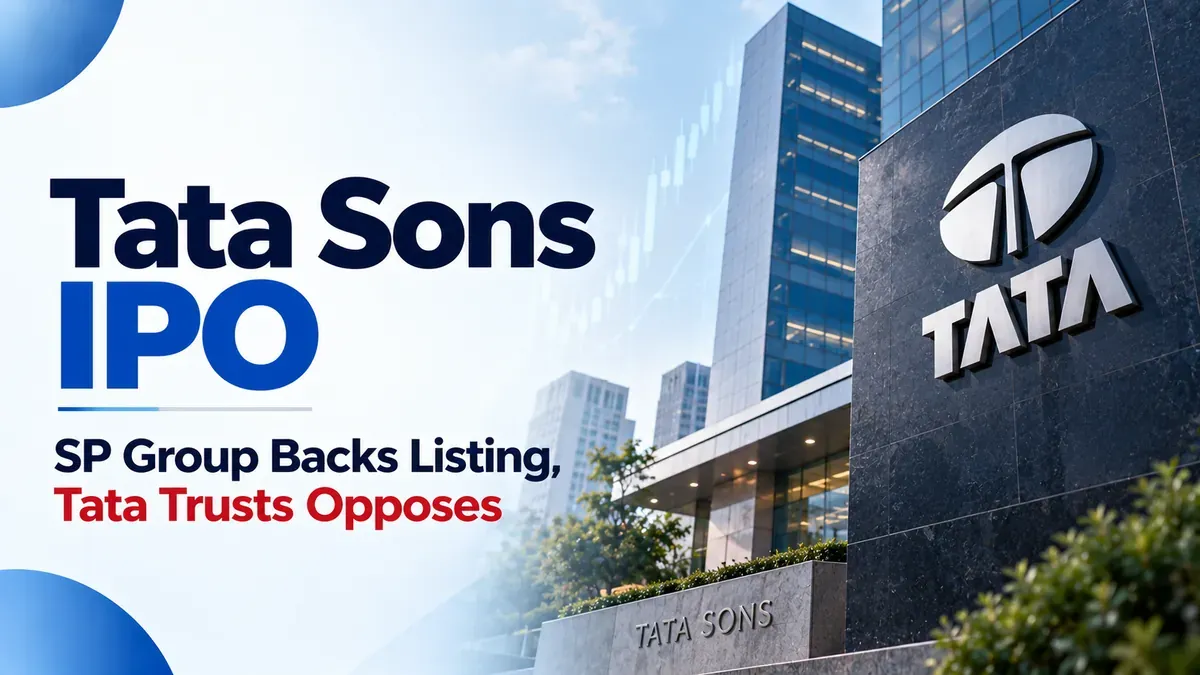
A fresh Tata Sons development puts SP Group and Tata Trusts on opposite sides of the IPO debate. Here’s what the 55.37% voting figure means for the AGM, why Singhvi and Salve disagree, and what investors should watch next.
The Tata Sons IPO battle is taking a new turn. The Shapoorji Pallonji Group, which owns an 18.37% stake in Tata Sons, now backs a public listing of the holding company after its separate plan to monetise part of its stake stalled.
That puts SP Group and Tata Trusts on opposite sides of the listing debate. At the same time, the dispute over N Chandrasekaran's reappointment is moving towards a legal confrontation, with senior advocates Abhishek Manu Singhvi and Harish Salve now presenting sharply different views on what lies at the heart of the conflict.
Singhvi, who is representing Tata Trusts, has argued that the central issue is the rights of the Trusts as the roughly 66% shareholder of Tata Sons. Salve, who is advising Chandrasekaran, has countered that the bigger issue is Tata Sons' proposed listing and the regulatory framework behind it.
For investors, the clash raises a bigger question: what happens when Tata Sons shareholders meet? The answer could depend not only on who owns the shares, but on which shareholders are actually able to exercise their voting rights.
Tata Sons IPO: SP Group Backs Listing After Stake Monetisation Plan Stalls
The latest development comes from the Shapoorji Pallonji Group, Tata Sons' second-largest shareholder.
SP Group had been exploring a separate structure to sell around 2.5% of its Tata Sons holding and unlock value from its investment. With those discussions failing to progress, the group is now backing a public listing of Tata Sons as an alternative route.
The shift is significant because it gives the listing proposal support from a major shareholder even as Tata Trusts remains opposed to the move.
For the market, a listing could create a publicly determined valuation for Tata Sons and potentially give shareholders a route to monetise their holdings. It also brings the interests of different shareholders into sharper focus as the company considers its next steps.
Tata Sons Boardroom Battle: Singhvi And Salve See Two Different Fights
The legal arguments around Tata Sons are also becoming clearer.
Singhvi has said the dispute is fundamentally about whether a board can act against the wishes of a shareholder group holding roughly 66% of Tata Sons. He has argued that the issue is not about Noel Tata or Chandrasekaran personally, but about the authority of the Tata Trusts as the controlling shareholder group.
Salve has taken a different view. According to his argument, the focus on the board meeting and Chandrasekaran's reappointment is distracting from the larger issue of Tata Sons' proposed listing and the Reserve Bank of India's regulatory position.
The difference between the two positions is important because it changes how the entire dispute is framed. One side sees it primarily as a shareholder-rights and governance question; the other sees the listing and regulatory framework as the bigger issue.
Tata Sons Voting: Why The AGM Could Change The Equation
This is where the shareholding arithmetic becomes important.
Tata Sons has 404,146 equity shares, with the Sir Ratan Tata Trust holding 95,211 shares, or 23.56%. If SRTT remains unable to exercise its voting rights, the effective voting base would fall to 308,935 shares, representing 76.44% of the company's total equity.
That changes the voting weight of the other Tata trusts.
The Sir Dorabji Tata Trust's 27.98% holding would represent 36.60% of the effective voting base, while six smaller Tata trusts collectively holding 14.35% of Tata Sons would account for 18.78%.
Together, the SDTT and the six smaller trusts would therefore represent about 55.37% of the effective voting base, assuming they vote together.
That does not mean they will necessarily act as a single bloc. But it shows why the eventual AGM could be important: the effective voting balance could look very different from Tata Trusts' headline ownership of around two-thirds of Tata Sons.
Tata Sons AGM: Why The 55.37% Figure Matters
The voting calculation becomes relevant because Tata Sons' earlier AGM was adjourned after a lack of quorum, with the next meeting required to be held by December 31.
If SRTT remains unable to participate, the smaller Tata trusts could have a much greater role in shareholder decisions than their individual holdings suggest.
For an ordinary resolution requiring a simple majority, the combined SDTT and smaller-trust holding could theoretically cross the threshold. A special resolution requiring 75% support, however, would require additional shareholder backing.
The key point for investors is that the eventual outcome cannot be judged simply by looking at the headline 66% Tata Trusts ownership. The voting rights that can actually be exercised at the meeting could produce a different balance.
Tata Sons Legal Fight: Why The Next Steps Matter
Singhvi has said the dispute now appears to be heading towards a legal battle, while Salve has argued that the underlying listing and regulatory questions need to be addressed.
That makes the next phase important for Tata Sons and, indirectly, for investors tracking Tata Group companies. The outcome could affect the company's governance structure, its route towards a possible listing and the balance between shareholder rights and board authority.
The immediate triggers to watch are the eventual Tata Sons AGM, the voting position of SRTT, the stance taken by the other Tata trusts and whether the disagreement results in formal court proceedings.
Also Read - Dilip Buildcon Emerges As L-1 Bidder For ₹1,265 Crore Maharashtra Transmission Project
This article is for informational purposes only and should not be considered investment advice from Kotak Neo. For compliance T&C and disclaimers, Visit www.kotakneo.com/disclaimer

Rochelle Britto has spent 8+ years decoding India's markets, businesses, and consumer economy, reporting for ET Prime and Times Internet along the way, covering the stories behind the numbers.
A Mumbai native and perpetual planner of the next holiday, she stays far, far away from the eternal question, “Where are we going next?” When she's not chasing headlines, she's chasing new cultures, open roads, and a bit of quiet in nature.
Right Tools, Rich Insights