NSE IPO effect: SBI, NIACL, GIC Re, Bank of Baroda, IFCI in focus as SEBI clears NSE's ₹30,000 crore IPO
 Add Preferred News Source
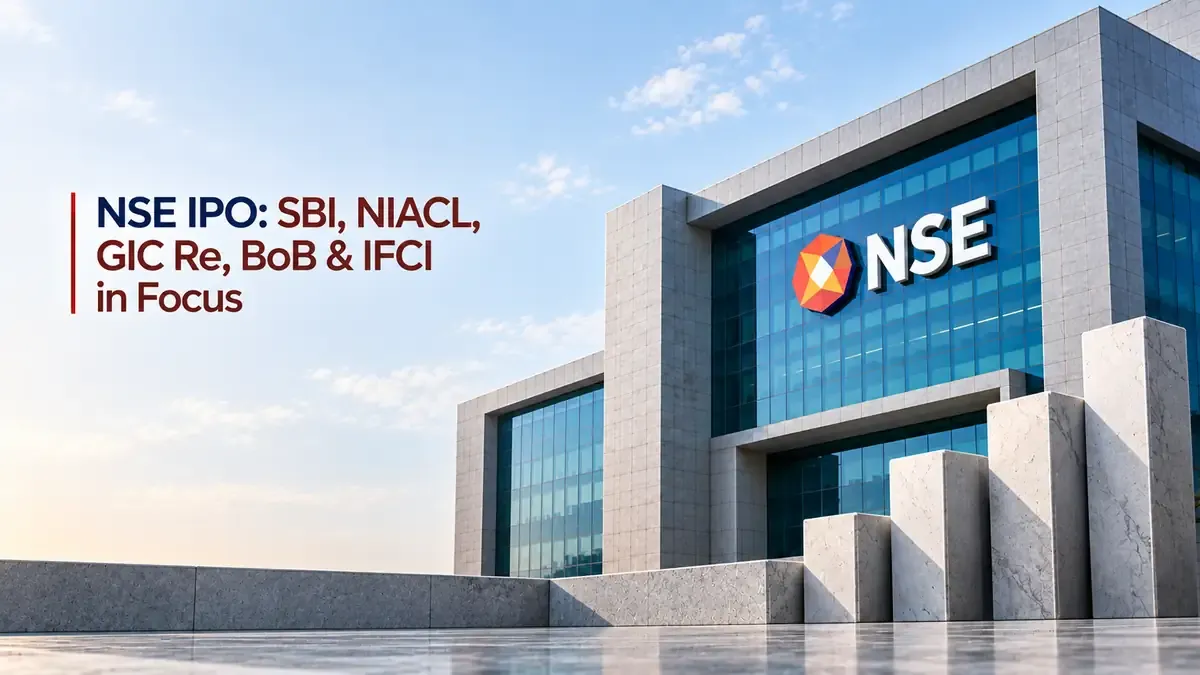
SBI plans to sell around 2.47 crore NSE shares, while NIACL, GIC Re and Bank of Baroda are also set to monetise portions of their holdings through the IPO.
Shares of State Bank of India (SBI), New India Assurance (NIACL), Bank of Baroda, GIC Re and IFCI are likely to remain in focus on Monday, September 7, after the Securities and Exchange Board of India (SEBI) cleared the National Stock Exchange's (NSE) long-awaited IPO.
The proposed ₹30,000 crore issue will be entirely an offer for sale (OFS), allowing existing shareholders to monetise part of their holdings. SBI, the largest listed selling shareholder, plans to sell around 2.47 crore NSE shares, while NIACL and GIC Re are expected to offload nearly 1.05 crore and 1.1 crore shares, respectively. Bank of Baroda is also set to sell up to around 1.1 crore shares.
IFCI, meanwhile, has indirect exposure to NSE through its 52.8% stake in Stock Holding Corporation of India, which in turn owns around 4.4% of the exchange.
The proposed IPO could unlock significant value for these shareholders. The impact is particularly relevant for SBI and the PSU insurers, given the low acquisition costs associated with their NSE holdings.
NSE IPO: Why these PSU stocks are in focus
SEBI's approval removes a major regulatory hurdle for NSE's proposed listing. The regulator issued its observation letter for the exchange's IPO, allowing the bourse to proceed with its public-market plans. NSE had filed its draft prospectus in June after its listing plans remained delayed for nearly a decade.
The NSE IPO will involve the sale of 14.89 crore NSE shares and could become India's largest-ever public issue. The offering is entirely an OFS, meaning NSE itself will not receive proceeds from the sale and the money will go to the existing shareholders selling their stakes.
The proposed issue would surpass Hyundai Motor India's ₹27,858.75 crore IPO in 2024 and LIC's ₹20,557.23 crore offering in 2022. It would also be significantly larger than Paytm's ₹18,300 crore IPO in 2021, Tata Capital's ₹15,511.87 crore issue in 2025 and Coal India's ₹15,200 crore offering in 2010.
NSE could, however, face competition from Jio Platforms for the title of India's largest IPO. Jio's offering has been estimated at around ₹37,700 crore, although its IPO timetable has not yet been announced.
NSE is expected to announce the price band and other issue details shortly. Reports have indicated that the exchange is targeting a listing around September 25, although the final schedule is yet to be announced. Reuters reported that NSE plans to launch the IPO in the week beginning September 21, while other reports have indicated that the price band could be announced earlier.
Once listed, NSE could rank among India's 10 most valuable companies by market capitalisation. The proposed listing comes after years of regulatory delays and scrutiny, making it one of the most closely watched IPOs in the Indian market.
NSE Q1 FY27 earnings
NSE's financial performance has also remained strong ahead of the proposed listing. The exchange reported a 7% year-on-year (YoY) rise in consolidated profit after tax (PAT) to ₹3,120 crore for the June quarter of FY27, compared with ₹2,924 crore in the same period last year.
Consolidated total income increased 9% YoY to ₹5,252 crore from ₹4,798 crore. Revenue from transaction charges, NSE's largest income source, rose to ₹3,623 crore from ₹3,154 crore a year earlier.
Revenue from data connectivity charges stood at ₹258 crore, while operating investment income came in at ₹234 crore. Revenue from data feed and terminal services was ₹150 crore. Total expenses increased to ₹1,129 crore in Q1 FY27 from ₹1,053 crore in the year-ago period.
During the quarter, NSE contributed ₹20,579 crore to the exchequer through collections and payments. This included Securities Transaction Tax/Commodities Transaction Tax (STT/CTT) of ₹18,313 crore, stamp duty of ₹980 crore, GST of ₹657 crore, income tax of ₹373 crore and SEBI fees of ₹256 crore.
Of the total STT/CTT collections, equity derivatives accounted for 57%, followed by the cash market delivery-based segment at 37% and the cash market intraday segment at 6%.
Also Read - NSE IPO impact: This PSU insurer hits 52-week high; check its NSE stake and other details
This article is for informational purposes only and should not be considered investment advice from Kotak Neo. For compliance T&C and disclaimers, Visit www.kotakneo.com/disclaimer

Rochelle Britto has spent 8+ years decoding India's markets, businesses, and consumer economy, reporting for ET Prime and Times Internet along the way, covering the stories behind the numbers.
A Mumbai native and perpetual planner of the next holiday, she stays far, far away from the eternal question, “Where are we going next?” When she's not chasing headlines, she's chasing new cultures, open roads, and a bit of quiet in nature.
Right Tools, Rich Insights