Add Preferred News Source

1,058 Views| 09 Nov 2026
FPI Investment In FAR Government Securities Rises By Nearly ₹8,000 Crore As Rupee Strengthens And Indian Bond Yields Ease
Summary
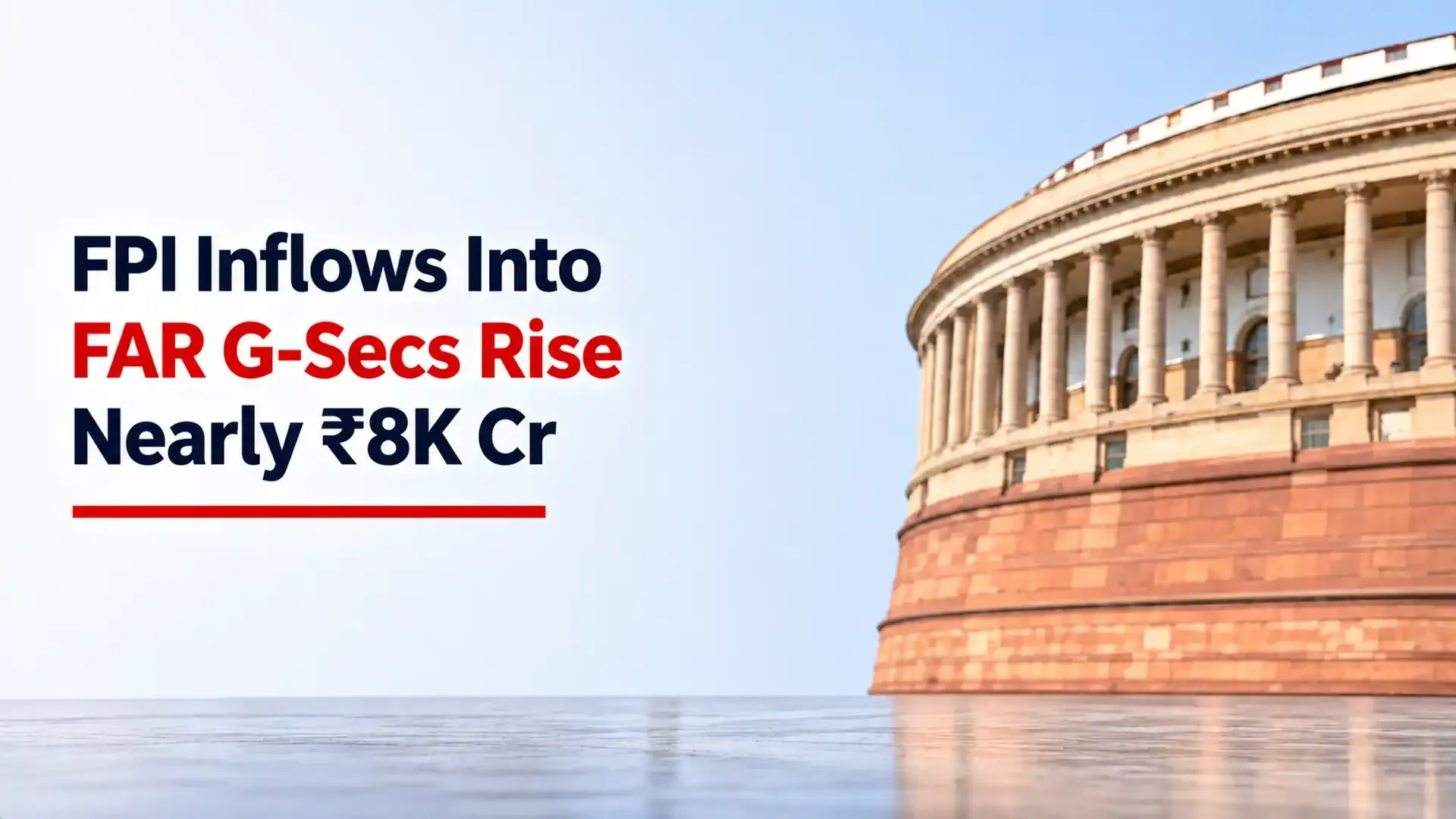
FPI holdings in Indian government securities under the FAR route increased by almost ₹8,000 crore in the first week of November. A stronger rupee against the US dollar and lower yields of government bonds were the key factors for this rally.
Foreign portfolio investors (FPIs) increased their holdings of Indian government securities under the Fully Accessible Route (FAR) by nearly ₹8,000 crore in the first week of November. The buying came alongside a recovery in the rupee and a decline in government bond yields.
FAR is a framework that allows non-resident investors to invest in specified Indian government securities without the usual investment limits applicable under other routes. It was introduced to widen overseas participation in India's government bond market.
FPI holdings in these securities rose from ₹3.57 lakh crore on 2 November to ₹3.65 lakh crore on 9 November. The movement marks a change from the withdrawals seen over the previous three months.
Why Did FPI Holdings Increase?
The rupee's recovery was one factor supporting foreign investor interest. It strengthened from ₹94.90 against the US dollar on 2 November to ₹93.74 on 9 November. A stronger rupee improves the value of returns when converted into dollars, which can make Indian government securities more attractive to foreign investors.
At the same time, the yield on the 10-year benchmark government security eased from 7.315% to 7.178%. Falling yields generally push up the market price of existing bonds, creating mark-to-market gains for investors holding them.
How Did Crude Oil Prices And Global Sentiment Help?
Lower crude oil prices helped ease pressure on the rupee. Brent crude, which had traded above $105 per barrel before the US mid-term results, declined to $96.41 per barrel on 9 November.
India's exposure to imported crude makes oil prices an important factor for the currency. A fall in prices can reduce pressure on the import bill and the demand for dollars, although currency movements also depend on capital flows and wider global conditions.
Stronger foreign fund inflows and expectations of reduced tensions in West Asia also supported the rupee. A rally in global artificial intelligence-related stocks improved investor sentiment and encouraged foreign investors to return to Indian equities, according to the report.
The latest increase comes after a difficult three-month period for foreign investment in FAR government securities. FPIs withdrew ₹846.11 crore in August, followed by ₹10,592.89 crore in September and ₹5,615.21 crore in October.
The withdrawals over this period reflected concerns around global interest rates, currency volatility and uncertainty over India's inclusion in global bond indices. Changing global bond yields also influenced the allocation decisions of overseas investors.
Also Read - Whirlpool Q2 FY27 Results: Revenue Grows 14% To ₹1,873 Crore; Company Announces 5% Price Hike From November
This article is for informational purposes only and should not be considered investment advice from Kotak Neo. For compliance T&C and disclaimers, Visit www.kotakneo.com/disclaimer
About the Author

Vishwa Ved
Vishwa has spent 10+ years across fintech and FMCG doing what most people miss, connecting the dots, catching trends before they trend, and finding the angle nobody else thought to ask about.
At Kotak Neo, she drives content strategy for neoshorts, Kotak News Desk, and Investing Guide, turning market noise into something worth reading.
When she's not decoding markets, she trades charts for canvases, chasing art, painting, and architecture across cities she's yet to explore.
Right Tools, Rich Insights

Latest News
- 1,084 Views| 09 Nov 2026
- 1,034 Views| 09 Nov 2026
- 1,063 Views| 09 Nov 2026
- 1,092 Views| 09 Nov 2026
- 1,098 Views| 09 Nov 2026
- 1,033 Views| 09 Nov 2026
- 1,041 Views| 09 Nov 2026
- 1,059 Views| 09 Nov 2026
- 1,026 Views| 09 Nov 2026