Gold Imports Plunge 81% In September As Silver Falls 49%: Will The Drop Make Gold Cheaper For Indian Buyers?
 Add Preferred News Source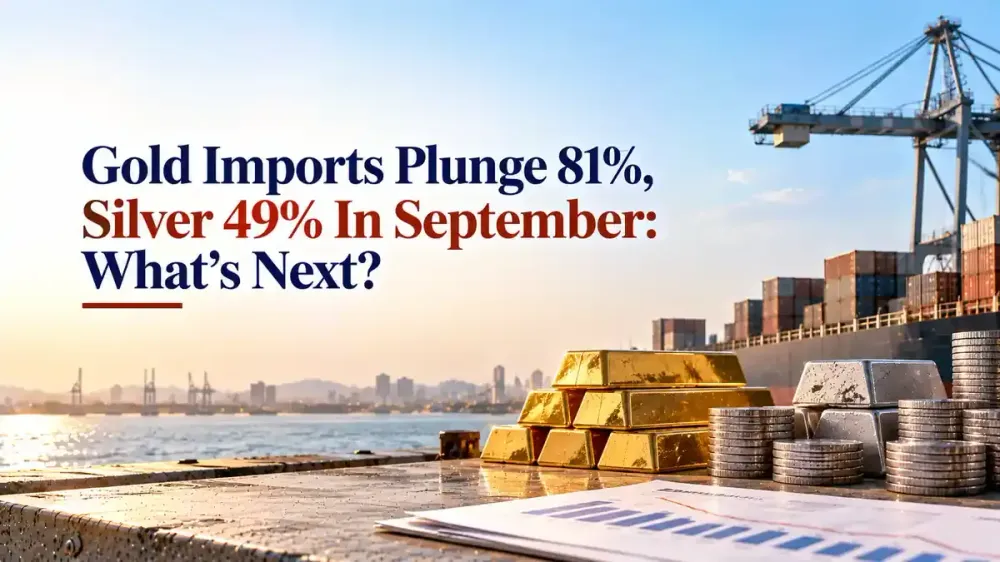
India’s gold imports plunged 81.27% year-on-year to $1.8 billion in September 2026, while silver imports fell 49.11% to $665.08 million, following a precious metals duty hike to 15% and amid calls to defer gold purchases.
India’s gold imports dropped 81.27% year-on-year to $1.8 billion in September 2026, while silver imports fell 49.11% to $665.08 million, according to Commerce Ministry data released on 15 October.
Both declined for a second straight month after the government raised the import duty on precious metals from 6% to 15% in May. Prime Minister Narendra Modi has also urged people to defer gold purchases amid the West Asia crisis and related disruptions, according to the report.
How Much Have Gold And Silver Imports Declined?
The September decline extended the fall in precious metal imports during the first half of the financial year. Between April and September of FY2026-27, gold imports fell 27.32% year-on-year to $19.27 billion. Silver imports declined 25.17% to $2.4 billion over the same period.
Gold and silver were among the commodities that recorded a fall in import value in September, the ministry’s data showed.
The government raised the import duty on precious metals from 6% to 15%, effective 13 May. The higher duty increased the cost burden on imports. Separately, Modi’s appeal to defer gold purchases came amid the West Asia crisis and the disruptions associated with it.
The two developments come as India’s imports of both metals have recorded consecutive monthly declines. The available data, however, does not quantify how much of the fall was attributable to the higher duty or the appeal to postpone purchases.
Why Does The Fall In Precious Metal Imports Matter For India?
Gold accounts for more than 5% of India’s total imports, according to the report. India is the world’s second-largest gold consumer after China, with imports primarily meeting demand from the domestic jewellery industry.
The value of gold imports also feeds into India’s merchandise trade deficit, which measures the difference between the value of goods imported and exported. A lower import bill can reduce pressure on the deficit, all else being equal. The overall trade balance, however, also depends on exports and imports of other goods.
Precious metal imports also affect the current account deficit (CAD), which reflects transactions involving goods, services, primary income and secondary income between India and the rest of the world. The September figures show a sharp decline in import value, though they do not establish the effect on the overall CAD.
Which Countries Supply India’s Gold, And Will Prices Fall?
Switzerland was India’s largest gold supplier, accounting for about 40% of imports. The United Arab Emirates followed with more than 16%, while South Africa accounted for around 10%.
India’s total imports from Switzerland fell 74.63% year-on-year to $893.2 million in September, the Commerce Ministry data showed.
The decline in import value does not necessarily mean consumers will see lower gold prices. Domestic retail prices also depend on international gold prices, the rupee-dollar exchange rate, import duties and other applicable costs.
The increase in import duty from 6% to 15% in May raised the cost of importing gold. Movements in global prices and the currency can also influence what buyers pay in India. A fall in import value alone is therefore insufficient to establish whether retail gold prices will decline.
This article is for informational purposes only and should not be considered investment advice from Kotak Neo. For compliance T&C and disclaimers, Visit www.kotakneo.com/disclaimer

Vishwa has spent 10+ years across fintech and FMCG doing what most people miss, connecting the dots, catching trends before they trend, and finding the angle nobody else thought to ask about.
At Kotak Neo, she drives content strategy for neoshorts, Kotak News Desk, and Investing Guide, turning market noise into something worth reading.
When she's not decoding markets, she trades charts for canvases, chasing art, painting, and architecture across cities she's yet to explore.
Right Tools, Rich Insights