Add Preferred News Source
1,004 Views| 01 Nov 2026
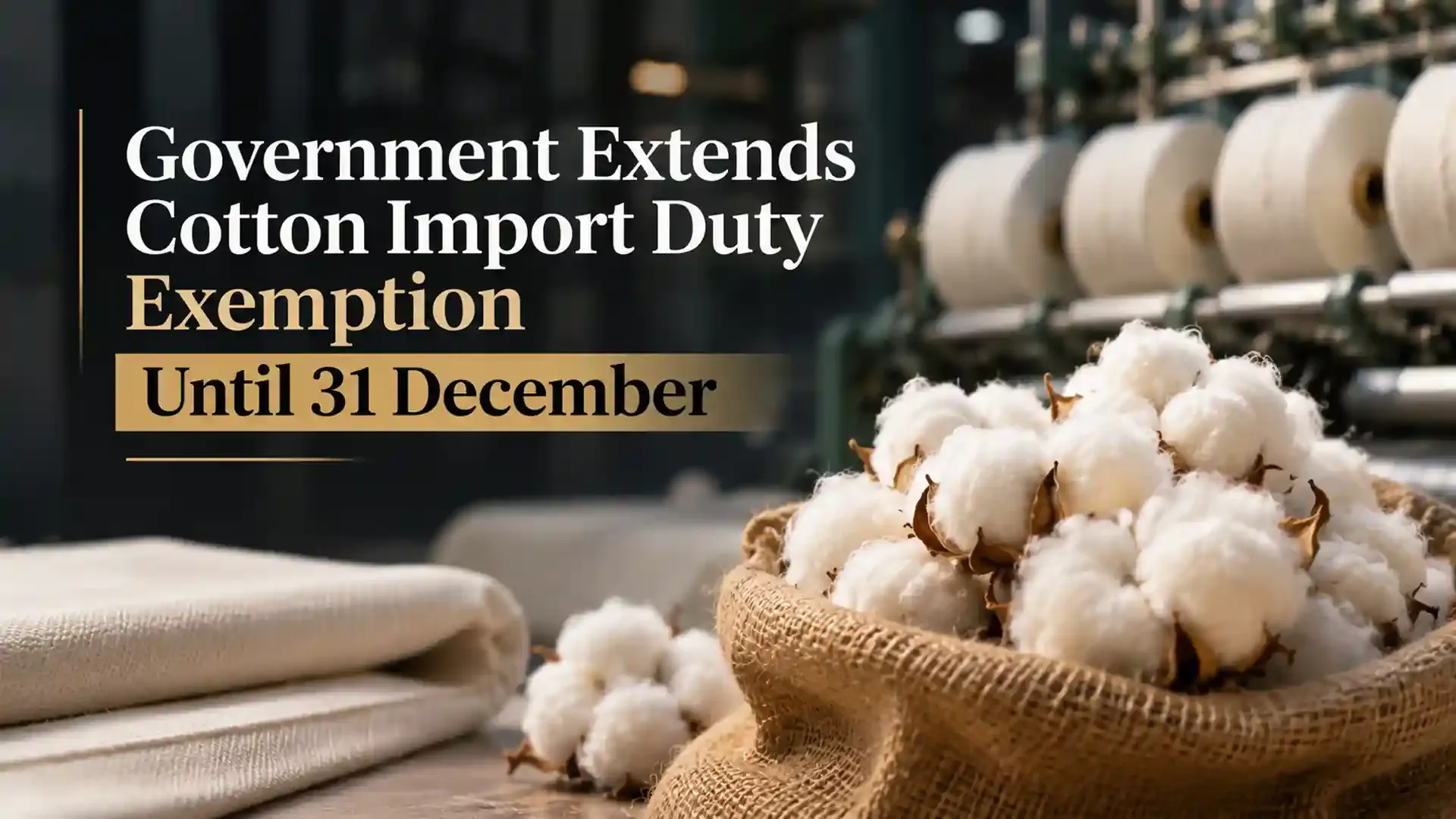
Government Extends Cotton Import Duty Exemption Until 31 December 2026 To Improve Supplies And Ease Textile Industry Costs
Summary
The government extended the cotton import duty exemption until 31 December 2026. The move aims to improve supplies, ease textile manufacturers’ costs and address India’s projected cotton shortfall.
The government has extended the customs duty exemption on cotton imports until 31 December 2026. The two-month extension is intended to improve raw material supplies and ease costs for India’s textile and apparel industry.
Cotton Import Duty Exemption Extended
The exemption was announced in May and was due to end on 31 October 2026. The government has now extended it by two months, allowing cotton imports to remain exempt from customs duty until 31 December 2026.
The decision is expected to improve cotton availability in the domestic market. It is also intended to help textile manufacturers, particularly small and medium enterprises (SMEs), manage their raw material costs.
Cotton Supply Shortage And Firm Prices Drive Extension
Domestic cotton prices have remained firm despite the arrival of the new-season crop in October. Reuters reported that prices were above ₹9,000 per 100 kg, compared with the government’s minimum support price of ₹8,717 for the new season.
India’s cotton output is expected to fall below 29 million bales in 2026–27, while demand is estimated to exceed 34 million bales. This points to a potential shortfall of more than five million bales. The stock-to-use ratio was also estimated at around 31%, its lowest level in five years.
Textile Manufacturers Expected To Benefit
The Finance Ministry said the extension is expected to reduce input costs across the textile and apparel sector. The measure is intended to provide relief to manufacturers and consumers, while keeping the interests of domestic cotton farmers in mind.
The government also expects the exemption to support the domestic textile industry by improving access to cotton. Greater availability of raw materials could help manufacturers maintain production and meet their requirements.
Also Read - AI Financing Risks Beyond The Bubble: Hidden Debt And Complex Deals Could Threaten Financial Stability
This article is for informational purposes only and should not be considered investment advice from Kotak Neo. For compliance T&C and disclaimers, Visit www.kotakneo.com/disclaimer
About the Author

Vishwa Ved
Vishwa has spent 10+ years across fintech and FMCG doing what most people miss, connecting the dots, catching trends before they trend, and finding the angle nobody else thought to ask about.
At Kotak Neo, she drives content strategy for neoshorts, Kotak News Desk, and Investing Guide, turning market noise into something worth reading.
When she's not decoding markets, she trades charts for canvases, chasing art, painting, and architecture across cities she's yet to explore.
Right Tools, Rich Insights

Latest News
- 1,043 Views| 01 Nov 2026
- 1,026 Views| 01 Nov 2026
- 1,078 Views| 01 Nov 2026
- 1,072 Views| 01 Nov 2026
- 1,100 Views| 31 Oct 2026
- 1,070 Views| 31 Oct 2026
- 1,078 Views| 31 Oct 2026
- 1,091 Views| 31 Oct 2026
- 1,016 Views| 31 Oct 2026