 Add Preferred News Source
SEBI Issues Warning on IPO Grey Market Premium (GMP); Cautions Investors Against Unregulated Trading
2 Min. Read• 1,062 Views
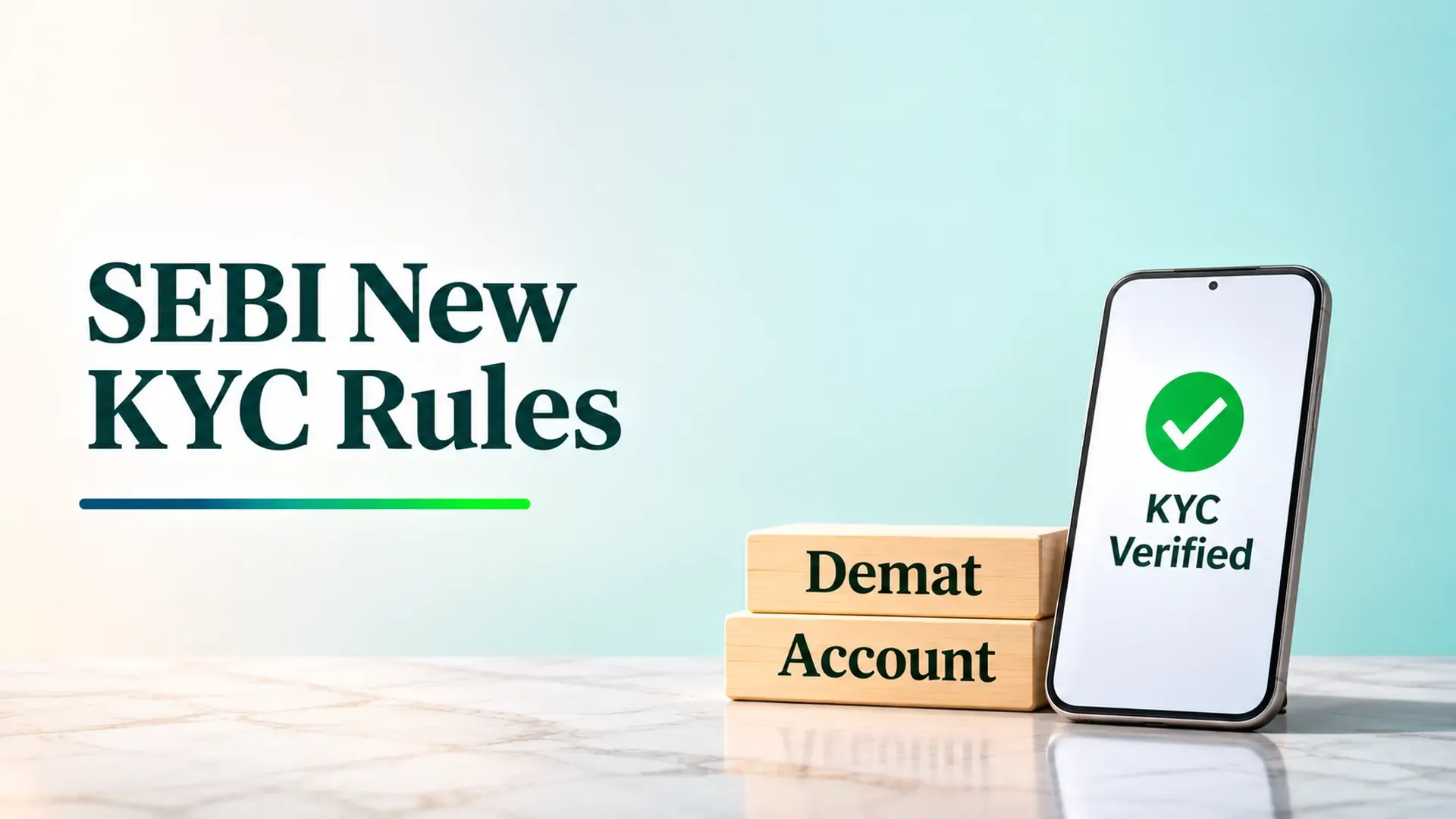
Investors who have completed their KYC with one stockbroker may no longer need to furnish certain details when opening an account with another. SEBI has also introduced norms to restrict the sharing of KYC information with intermediaries after an investor closes an account.
Investors opening a new demat or trading account from December 24, 2026, will have fewer KYC formalities to complete. The Securities and Exchange Board of India (SEBI), in a circular issued on Wednesday, November 25, eased several requirements related to account opening, including the submission of personal details, mobile number verification and address proof.
As part of the new KYC rules, details such as an investor's occupation and income range will be maintained centrally by KYC Registration Agencies (KRAs). Investors need not furnish this information separately to every stockbroker they open an account with, if the details are already available with the KRA.
SEBI has also done away with the requirement of submitting separate proof of a name change in cases where an investor's PAN and Aadhaar already carry the updated name.
1. Common KYC details: Details such as income range, occupation, Central KYC Identifier (CKYC ID) and tax-related information will be maintained at the KRA level. Intermediaries have been given three working days from the completion of the initial KYC process to upload the prescribed information.
2. Mobile number verification: A stockbroker may skip a fresh mobile number verification if the number registered with the KRA has already been verified through Aadhaar.
3. Address verification: Investors need not have both their current and permanent addresses verified for KYC portability. Verification of either address, along with other prescribed details and PAN-Aadhaar linkage, will suffice. Additional documents may be sought if the KYC record has not been validated.
4. Overseas address proof: Overseas Citizens of India (OCI) cardholders and foreign nationals who qualify as Indian residents can submit proof of their Indian address. Furnishing proof of an overseas address will be optional in such cases.
5. Name change: A separate document supporting a name change will not be required if the new name appears on both PAN and Aadhaar. In other cases, investors may have to furnish relevant documents such as a marriage certificate, passport or gazette notification.
6. KYC details of closed accounts: Stockbrokers and other intermediaries, excluding mutual funds, will have five working days to report an account closure to the KRA. The agency will have another two working days to delink the records. SEBI has prescribed separate timelines for inactive mutual fund accounts and cases where an intermediary accesses an investor's KYC details but does not open an account within 21 working days.
The revised KYC norms will come into effect on December 24, 2026, unless specified otherwise. SEBI has asked KRAs to issue standard operating procedures within 30 days of the circular.
The market regulator has made the changes to its KYC Master Circular issued on October 12, 2023. The remaining provisions of the circular will continue to apply.
This article is for informational purposes only and should not be considered investment advice from Kotak Neo. For compliance T&C and disclaimers, Visit www.kotakneo.com/disclaimer
Rochelle Britto is a business journalist with more than 8 years of experience reporting on financial markets and the economy. Her coverage spans equity markets, corporate earnings, IPOs, commodities, and macroeconomic trends. Rochelle holds a bachelor’s degree in Banking and Finance from St Andrews College and a postgraduate qualification in Marketing and Communication from the MET Institute.
Throughout her career at business publications, Rochelle has covered sectors including banking and financial services, retail, consumer goods, advertising, and e-commerce. She focuses on making complex financial developments accessible, helping readers understand market movements, company performance, and broader economic shifts.
Outside work, she enjoys travelling, exploring local cultures, and spending time in nature.
Right Tools, Rich Insights