RBI Proposes Harmonised Interest Rate Framework, Eases Benchmark Rule For NBFCs
 Add Preferred News Source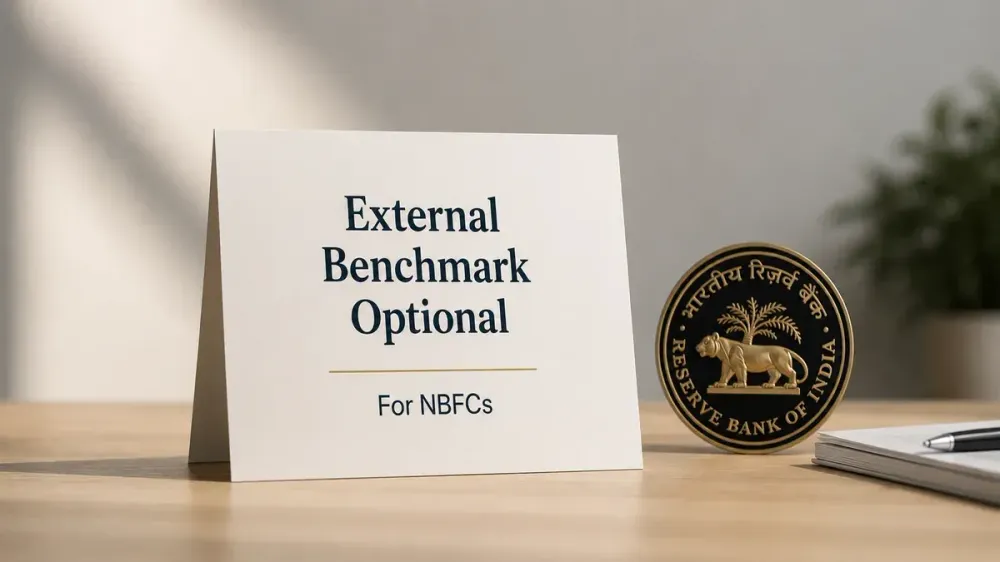
The Reserve Bank of India has proposed optionality in external benchmark-linked loans for non-banking finance companies under new draft norms to bring interest rate rules on par across regulated entities, besides proposing that small-ticket loans up to ₹50,000 are not priced at usurious rates. Read ahead to know more.
The Reserve Bank of India (RBI) has proposed making external benchmark-linked lending optional for non-banking financial companies (NBFCs). The draft framework also aims to prevent small-ticket loans from being priced at excessively high interest rates.
The proposed rules seek to bring interest rate practices across different categories of regulated lenders closer to a common framework.
Under the draft, commercial banks would continue to link floating-rate retail loans and floating-rate loans to micro, small and medium enterprises (MSMEs) to an external benchmark.
However, this requirement would not be mandatory for NBFCs, all-India financial institutions (AIFIs), regional rural banks (RRBs) and cooperative banks. These lenders would have the option to offer floating-rate loans linked to an external benchmark.
Caps Proposed On Small-Ticket Loan Rates
According to the draft, all regulated entities would be required to ensure that interest rates on loans up to ₹50,000 are not usurious and must explicitly specify a ceiling on the annual percentage rate, inclusive of interest and all other charges, for microfinance and small-value loans.
For short-term agricultural loans extended to small and marginal farmers, defined as those with a tenor of up to one year, the total interest and other charges cannot exceed the principal loan amount.
All existing loans would need to be migrated to the new framework through a one-time mapping exercise by 1 April 2029, with borrower consent required and no increase permitted in the interest rate applicable immediately before the transition. Lenders would also be barred from levying any charges for this migration.
Reasoning Behind The Proposed Changes
The RBI said its interest rate instructions are designed to ensure effective monetary policy transmission, appropriate pricing of credit risk, and fair treatment of borrowers. At present, detailed lending rate regulations largely apply to commercial banks, while rules for other regulated entities, including NBFCs, mostly pertain to conduct-related matters.
The central bank noted that it had observed divergent practices among commercial banks in areas such as the determination of the marginal cost of a funds-based lending rate and its components, prompting the proposal for a harmonised, principles-based framework applicable to all regulated entities.
Key Features Of The Proposed Framework
The draft rules propose that interest rates on both fixed and floating-rate loans be linked to an internal or external benchmark, along with a risk-based spread. Lenders would not be allowed to offer loans at rates below the applicable benchmark.
For floating-rate loans, lenders would need to mention the benchmark, reset frequency and reset date in the loan agreement. The rate would generally have to be reset at least once every three months. However, this requirement would not apply to Base Layer NBFCs and certain smaller cooperative banks.
The draft also calls for a board-approved policy to set the spread over the benchmark. This spread could include the credit risk premium (CRP), operating costs, term premium and business strategy premium. The CRP could be changed only if there is a change in the borrower's credit profile.
Interest would be calculated on a daily reducing balance basis using the actual number of days in the calculation period. If a benchmark is discontinued during the loan tenure, lenders would have to replace it without putting the borrower at a disadvantage.
Also Read - SEBI Proposes Major SME Listing Overhaul To Widen Investor Participation
This article is for informational purposes only and should not be considered investment advice from Kotak Neo. For compliance T&C and disclaimers, Visit www.kotakneo.com/disclaimer

Vishwa has spent 10+ years across fintech and FMCG doing what most people miss, connecting the dots, catching trends before they trend, and finding the angle nobody else thought to ask about.
At Kotak Neo, she drives content strategy for neoshorts, Kotak News Desk, and Investing Guide, turning market noise into something worth reading.
When she's not decoding markets, she trades charts for canvases, chasing art, painting, and architecture across cities she's yet to explore.
Right Tools, Rich Insights