 Add Preferred News Source

2 Min. Read• 1,065 Views
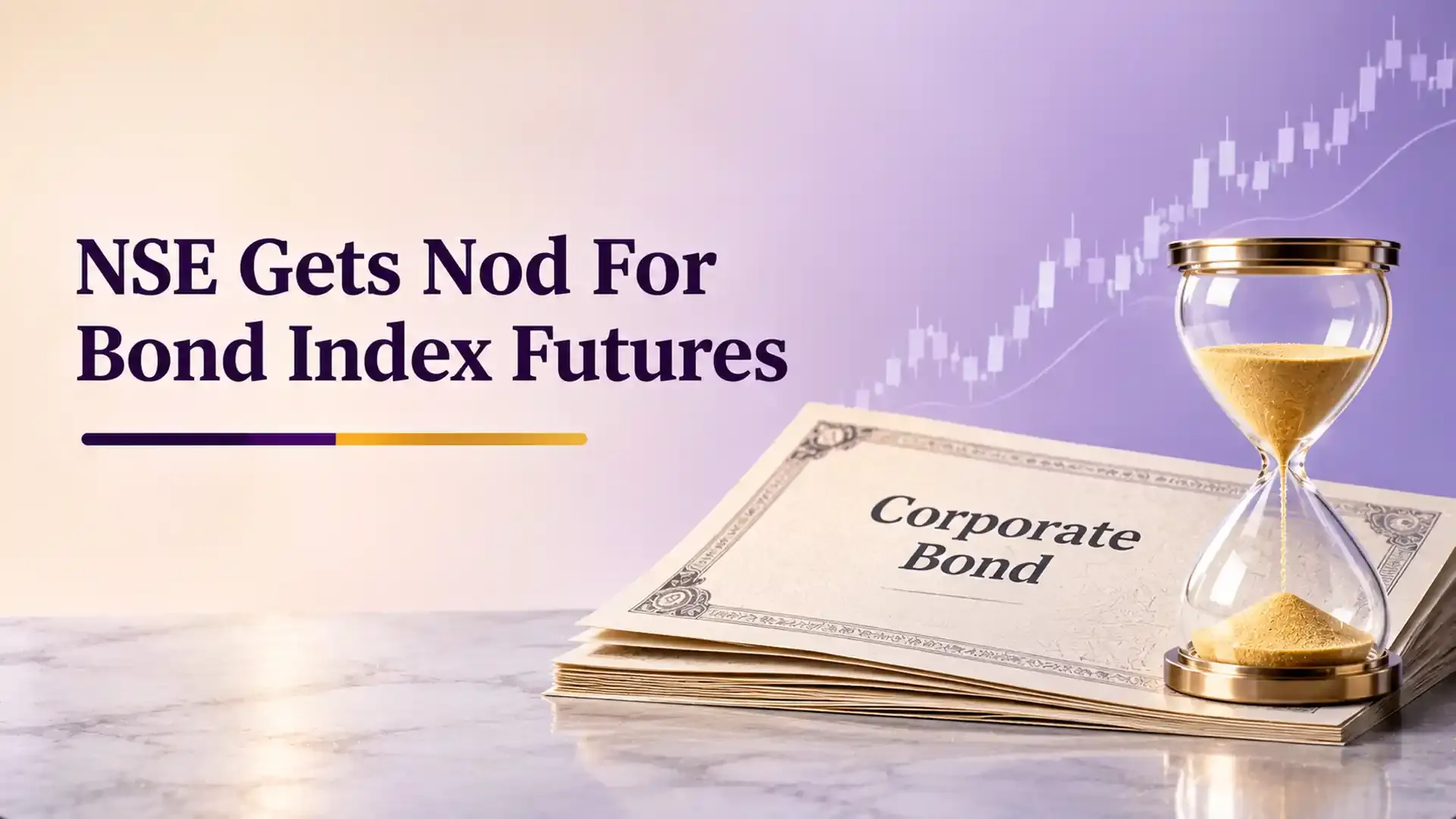
NSE Secures RBI Nod for Corporate Bond Index Futures After SEBI Clearance in October; Launch Date Awaited
Summary
NSE is set to expand its derivatives segment beyond its existing offerings in the debt market. The new contracts will help investors hedge their corporate bond holdings.
The National Stock Exchange of India (NSE) on Thursday, November 26, said it had received a no-objection certificate (NOC) from the Reserve Bank of India (RBI) for the introduction of corporate bond index futures. The exchange had received clearance from the Securities and Exchange Board of India (SEBI) on October 1 this year.
NSE did not give a timeline for the launch but said it would now undertake the operational work required to introduce the contracts. Details of the product and the date from which trading will begin will be announced separately.
The new contracts will give investors in the corporate debt market a means of protecting their portfolios against price fluctuations. These could arise from changes in interest rates or credit spreads, both of which have a bearing on the market value of corporate bonds.
Eligible market participants will also be able to trade based on their expectations of price movements in the corporate bond market, NSE said.
How Will NSE Corporate Bond Index Futures Work?
A corporate bond index tracks a basket of debt securities issued by companies. The composition of an index can vary depending on the maturity of the bonds, their credit ratings and the type of issuers.
For an investor holding corporate bonds, a change in interest rates can affect the value of the portfolio even when the interest income from those bonds remains unchanged. Existing bonds tend to lose value when rates go up, as investors can earn higher returns on newly issued debt.
Another factor is the credit spread, or the difference between the yield on a corporate bond and that on a government bond of similar maturity. The spread can widen if investors perceive an increase in the risk associated with corporate debt.
With index futures, an investor holding bonds issued by several companies could hedge against a broader decline in bond prices instead of dealing with each security individually. The extent of that protection would depend on how closely the investor's holdings match the underlying index.
India's fixed-income market already has exchange-traded funds (ETFs) and other passive debt products that track bond indices. While these products give investors exposure to the debt market, futures can be used to manage risks associated with existing investments.
NSE has yet to name the corporate bond indices on which the contracts will be based. Other trading details, including the contract size, expiry and settlement mechanism, are also awaited.
Also Read - SEBI Targets IPO Grey Market Premium Platforms; Seeks to Curb Revenue From Brokers and Intermediaries
This article is for informational purposes only and should not be considered investment advice from Kotak Neo. For compliance T&C and disclaimers, Visit www.kotakneo.com/disclaimer
About the Author

Rochelle Britto
Rochelle Britto is a business journalist with more than 8 years of experience reporting on financial markets and the economy. Her coverage spans equity markets, corporate earnings, IPOs, commodities, and macroeconomic trends. Rochelle holds a bachelor’s degree in Banking and Finance from St Andrews College and a postgraduate qualification in Marketing and Communication from the MET Institute.
Throughout her career at business publications, Rochelle has covered sectors including banking and financial services, retail, consumer goods, advertising, and e-commerce. She focuses on making complex financial developments accessible, helping readers understand market movements, company performance, and broader economic shifts.
Outside work, she enjoys travelling, exploring local cultures, and spending time in nature.
Right Tools, Rich Insights

Latest News
- 2 Min. Read• 1,084 Views
- 2.5 Min. Read• 1,017 Views
- 2 Min. Read• 1,100 Views
- 2.5 Min. Read• 1,060 Views
- 2 Min. Read• 1,062 Views
- IDBI Bank Disinvestment Awaits RBI Nod for ₹52,878 Crore Fairfax Deal; DIPAM Secretary Shares Update
 3 Min. Read• 1,002 Views
- 5 Min. Read• 1,092 Views
- 2.5 Min. Read• 1,000 Views
- 2 Min. Read• 1,030 Views