Raksha Bandhan 2026: Gold investment options beyond jewellery and coins explained
 Add Preferred News Source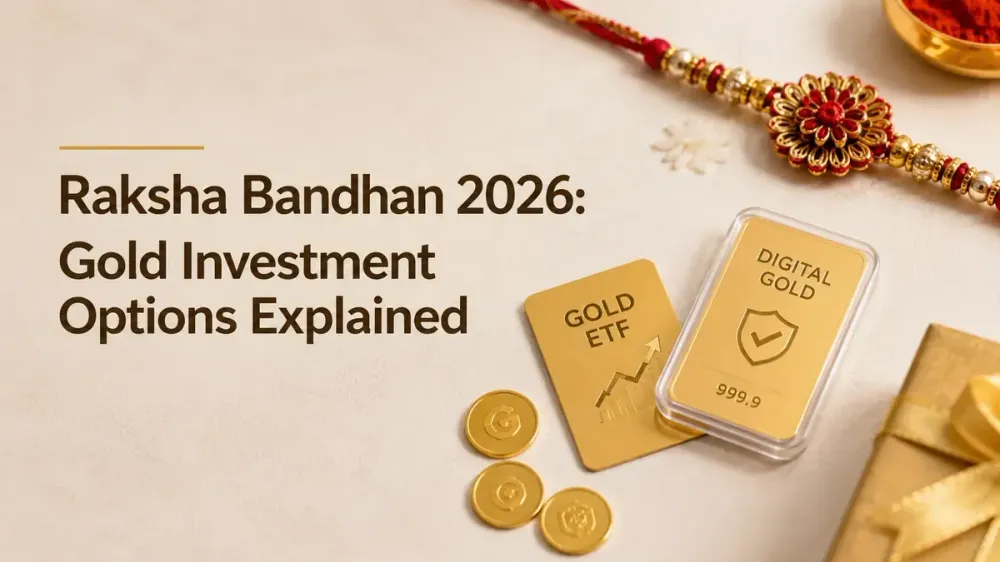
Gold gifting on Raksha Bandhan goes beyond jewellery and coins. Know the costs, risks and investment options, including ETFs, mutual funds and EGRs.
Rakhi has traditionally been associated with gifts, and gold remains one of the more popular choices for families looking for something that carries both sentimental and financial value. But the way people can gift gold has changed. Jewellery and coins are no longer the only options, with Gold ETFs, gold mutual funds and Electronic Gold Receipts (EGRs) also offering routes to gold exposure.
We spoke to Sunil Katke, Head of Commodities at Kotak Neo, about the different ways investors can approach gold gifting this Raksha Bandhan and what they should keep in mind when choosing between physical gold and financial products.
Gold jewellery: The timeless choice
For someone who enjoys jewellery, a pendant, pair of earrings, bracelet or ring remains one of the most personal Rakhi gifts.
Katke said jewellery continues to have an emotional value that other forms of gold may not replicate. It can be worn, retained for years and eventually passed on within the family.
But there is also a financial trade-off.
Jewellery comes with making charges, which vary depending on the design and jeweller. Buyers also pay 3% GST on the purchase. This means the price paid for a piece of jewellery can be significantly higher than the value of the gold itself.
"If the primary objective is investment, jewellery may not always be the most efficient way to buy gold," Katke said, pointing to the additional costs involved.
For someone buying jewellery primarily as a Rakhi gift, however, the emotional value can be just as important as the investment component.
Gold coins: Where tradition meets investment
Gold coins offer another way to gift physical gold without the making charges associated with jewellery.
Katke said coins can work as a middle ground for someone who wants to retain the traditional aspect of gifting gold while keeping the purchase relatively straightforward. Depending on the budget, buyers can consider different denominations, including 1 gram, 2 grams, 5 grams or 10 grams.
Purity and hallmarking should be checked before buying. Buyers should also look at the seller's buy-back terms, particularly if the recipient may eventually want to sell or exchange the coin.
Digital gold: Convenience comes with a regulatory distinction
Digital gold has made it possible to purchase very small quantities of gold online, with the underlying metal generally stored in a vault. Depending on the platform, investors may also have the option of redeeming their holdings for physical gold or cash.
However, Katke said investors should not treat digital gold as equivalent to regulated gold investment products.
In November 2025, SEBI cautioned investors about digital gold and e-gold products offered through online platforms. The regulator said these products fall outside its regulatory framework and therefore do not have the investor-protection mechanisms available for securities regulated by SEBI.
That distinction matters when comparing digital gold with products such as Gold ETFs, gold mutual funds and EGRs.
Gold ETFs: Gifting an investment, not just gold
For a sibling who already invests through a demat account, a Gold ETF can offer a more market-oriented way to gift exposure to the precious metal.
Gold ETFs invest in physical gold and are traded on stock exchanges, much like shares. They eliminate the need for investors to purchase and store physical gold themselves and do not involve jewellery-making charges.
There are, however, costs to consider, including fund expenses and the charges associated with buying and selling units.
Katke said Gold ETFs can be considered for someone who is comfortable with market-linked investments and already has a demat account. In such a case, the Rakhi gift becomes an investment that can sit alongside the recipient's other assets rather than another physical item to store.
Gold mutual funds: Building an investment habit
Gold mutual funds offer another option, particularly for someone who is new to investing or does not have a demat account.
These funds typically invest in Gold ETFs and allow investors to gain exposure to gold through the mutual fund route. They can also be used through systematic investment plans, or SIPs.
Katke said starting a small SIP could be an alternative to making a one-time investment. The approach shifts the focus from simply giving a fixed amount of money to encouraging a regular investment habit.
For someone at the beginning of their investment journey, this could make a Gold Mutual Fund more accessible than an exchange-traded product.
EGRs: The lesser-known regulated gold option
Electronic Gold Receipts, or EGRs, are another route for investors who are familiar with market-based products.
EGRs represent physical gold deposited in an approved vault. The gold is converted into electronic receipts, which can then be traded on recognised stock exchanges. Subject to applicable rules, the receipts can subsequently be converted back into physical gold.
Katke stressed that EGRs should not be confused with digital gold offered by online platforms.
EGRs fall within the SEBI-regulated securities-market framework, whereas digital gold products offered through online platforms are outside SEBI's regulatory framework.
For an investor comfortable with exchange-based investments, EGRs can therefore provide exposure to physical gold without the need to keep the metal at home.
What about silver?
Gold may dominate the conversation around Rakhi gifting, but silver can also be considered by those looking for an alternative.
Silver jewellery or coins can provide a lower-cost way of gifting a precious metal. Its demand profile is also different from gold because silver has substantial industrial applications in addition to investment and jewellery demand.
Katke said silver could therefore be an option for someone who wants to move away from the traditional gold gift while still choosing a precious metal.
Which gold option should you choose?
The most suitable option depends largely on what the recipient wants from the gift and how comfortable they are with financial products.
Recipient's preference | Option to consider |
|---|---|
Loves jewellery | Gold jewellery |
Prefers physical assets | Gold coin |
Already invests through a demat account | Gold ETF |
Is new to market investments | Gold mutual fund |
Wants to build an investment habit | Gold mutual fund through SIP |
Understands exchange-traded products | EGR |
Wants an alternative to gold | Silver |
Katke said there does not necessarily have to be a choice between an emotional gift and a financial investment. A small piece of jewellery or a gold coin can carry the traditional sentiment of Raksha Bandhan, while a financial investment can be added alongside it for the longer term.
The distinction is important because each form of gold comes with a different cost structure, level of liquidity and regulatory framework. Jewellery and coins provide physical ownership, while ETFs, mutual funds and EGRs offer market-linked exposure without the need to store gold personally.
For investors, therefore, the question this Raksha Bandhan is not simply how much gold to gift, but which form of gold best matches the recipient's financial needs and investment objective.
Also Read - TVS Motor share price falls 4% as Peyman Kargar to replace K N Radhakrishnan as CEO
This article is for informational purposes only and should not be considered investment advice from Kotak Neo. For compliance T&C and disclaimers, Visit www.kotakneo.com/disclaimer

Rochelle Britto has spent 8+ years decoding India's markets, businesses, and consumer economy, reporting for ET Prime and Times Internet along the way, covering the stories behind the numbers.
A Mumbai native and perpetual planner of the next holiday, she stays far, far away from the eternal question, “Where are we going next?” When she's not chasing headlines, she's chasing new cultures, open roads, and a bit of quiet in nature.
Right Tools, Rich Insights