 Add Preferred News Source

3 Min. Read• 1,063 Views
USD INR Rate: Rupee Falls 20 Paise to 92.40 Against US Dollar as Crude Oil Prices Rise and Tariff Concerns Mount
Summary
The rupee reversed part of Wednesday's 65-paise gain after the US proposed fresh tariffs on Indian imports. A recovery in Brent crude above $95 per barrel added to the pressure, despite continued foreign fund inflows.
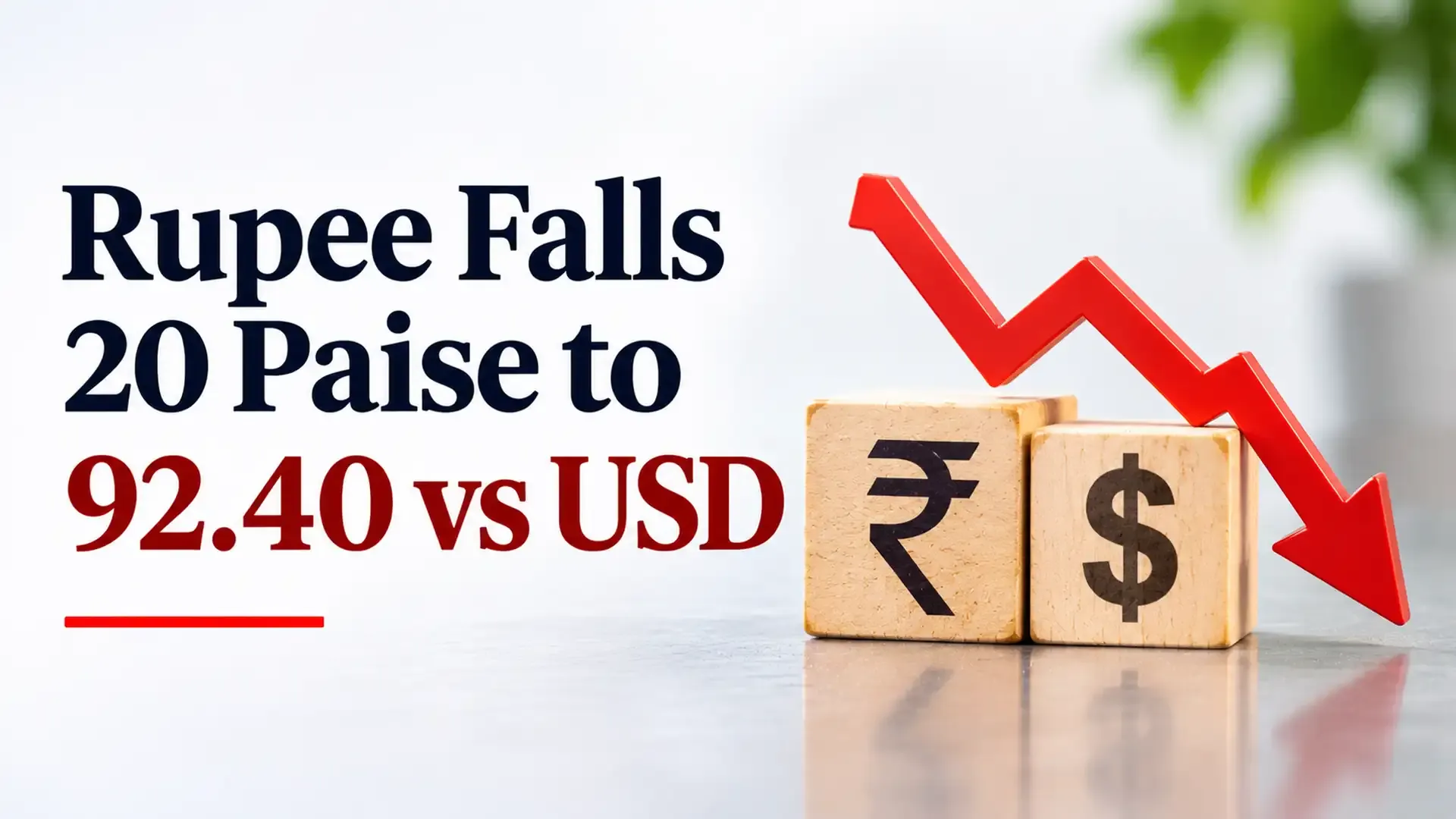
The Indian rupee fell 20 paise to 92.40 against the US dollar in early trade on Thursday, November 26, as rising crude oil prices and a proposed 25% US tariff on Indian imports increased demand for the American currency, PTI reported.
At the interbank foreign exchange market, the rupee opened at 92.50 against the US dollar, recovered to 92.39 and subsequently slipped to 92.40. The domestic currency had gained 65 paise on Wednesday to close at 92.20, its strongest closing level so far this financial year.
The fall in the rupee comes after nearly seven weeks of recovery. The Indian currency has appreciated nearly 5% from its record closing low of 96.88 against the US dollar on October 8. Wednesday's closing rate was also stronger than the 92.28 recorded on March 16.
Why Is the Rupee Falling Against the US Dollar?
1. Rising crude oil prices: Brent crude oil futures rose 0.77% to $95.34 per barrel on Thursday. Higher crude oil prices have increased concerns over India's import bill, while rising dollar demand from oil importers has put pressure on the dollar to rupee exchange rate.
2. Fresh US tariff concerns: The Donald Trump administration on Wednesday proposed a 25% tariff on imports from India, with a provision to cap the rate at 17% if the two countries reach a bilateral trade agreement. The proposal follows investigations by the US Trade Representative (USTR) into 16 economic jurisdictions, alleging that India's policies and practices contributed to structural excess production capacity. India has rejected the allegations and reiterated its commitment to an early conclusion of the bilateral trade agreement.
3. Stronger US dollar: The dollar index, which measures the strength of the American currency against a basket of six major currencies, rose 0.17% to 103.79 in early trade, adding to the pressure on the rupee.
4. Mixed domestic equity markets: The Sensex gained 138.54 points, or 0.17%, to 84,076.82, while the Nifty 50 declined 26.05 points, or 0.10%, to 25,793.20 in early trade.
Meanwhile, foreign fund inflows continued to offer some support to the Indian currency. Foreign institutional investors (FIIs) bought Indian equities worth ₹4,479.08 crore on a net basis on Wednesday, according to exchange data.
USD INR Rate Outlook
According to Anindya Banerjee of Kotak Neo, foreign portfolio inflows, dollar selling by exporters and the recent decline in crude oil prices have supported the rupee. Foreign portfolio inflows in November have approached $15 billion.
“For USD/INR, 92 remains the immediate support. A sustained break below this level could open 91.50. On the upside, 92.60 and 93 are the important resistance levels,” Banerjee said.
However, he cautioned that the recovery in crude oil prices needs close monitoring. A sustained rise in Brent crude above $100 per barrel could increase India's import costs and revive inflation concerns, putting pressure on the rupee.
Besides developments surrounding the India-US trade agreement, the November 29 OPEC+ meeting and the US Federal Reserve's December 8–9 monetary policy meeting will remain important for the dollar to rupee exchange rate.
Also Read - Brent Crude Oil Prices Near $95 per Barrel Amid Middle East Tensions Ahead of November 29 OPEC+ Meeting
This article is for informational purposes only and should not be considered investment advice from Kotak Neo. For compliance T&C and disclaimers, Visit www.kotakneo.com/disclaimer
About the Author

Rochelle Britto
Rochelle Britto is a business journalist with more than 8 years of experience reporting on financial markets and the economy. Her coverage spans equity markets, corporate earnings, IPOs, commodities, and macroeconomic trends. Rochelle holds a bachelor’s degree in Banking and Finance from St Andrews College and a postgraduate qualification in Marketing and Communication from the MET Institute.
Throughout her career at business publications, Rochelle has covered sectors including banking and financial services, retail, consumer goods, advertising, and e-commerce. She focuses on making complex financial developments accessible, helping readers understand market movements, company performance, and broader economic shifts.
Outside work, she enjoys travelling, exploring local cultures, and spending time in nature.
Right Tools, Rich Insights

Latest News
- 3 Min. Read• 1,041 Views
- 2 Min. Read• 1,082 Views
- 4 Min. Read• 1,099 Views
- 2.5 Min. Read• 1,017 Views
- 2.5 Min. Read• 1,081 Views
- 2 Min. Read• 1,014 Views
- 2.5 Min. Read• 1,020 Views
- 2.5 Min. Read• 1,022 Views
- 3.5 Min. Read• 1,054 Views