 Add Preferred News Source

2 Min. Read• 1,016 Views
Trump Tariffs on India: List of Products From Pharma, Auto and Metal Sectors That Could Be Exempt From Proposed 25% Duty

Summary
Smartphones, patented pharmaceutical products and certain goods covered under Section 232 duties feature in the proposed tariff exemption list released by the US Trade Representative. Washington has invited public comments on the proposed measures until January 5, 2027.
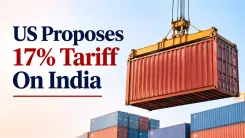
The United States on Wednesday, November 25, proposed tariffs of up to 25% on Indian imports, with exemptions for several products across the pharmaceutical, automobile, metal and electronics sectors. The proposed tariff rate could come down to 17% if India and the US reach a trade agreement addressing the findings of Washington's latest trade investigation.
The Office of the United States Trade Representative (USTR) has proposed excluding smartphones, patented pharmaceutical products, certain automobile components, semiconductors and specified steel, aluminium and copper products from the additional duties.
The proposed levies follow investigations under Section 301 of the Trade Act of 1974 into manufacturing policies and excess industrial capacity across several US trading partners, including India, China and the European Union (EU).
The USTR has also proposed excluding certain products that cannot be produced in sufficient quantities in the US or sourced from alternative markets.
US Tariffs on India: List of Proposed Exemptions
Products already subject to certain duties under Section 232 of the Trade Expansion Act of 1962 have been proposed for exclusion from the additional tariffs. These include specified metal products, automobiles and automobile components, among others.
The following product categories feature in the proposed exemption list:
Sector | Products Proposed for Exemption |
|---|---|
Pharmaceuticals | Patented pharmaceutical products and specified medicinal preparations |
Automobiles | Passenger vehicles, light trucks, medium and heavy-duty vehicles and specified components |
Metals | Specified steel, aluminium and copper products |
Electronics | Smartphones and specified semiconductor products |
Mining | Certain processed iron ores and concentrates |
Timber | Specified wood products |
Smartphones have been listed separately under tariff classification code 8517.13.00. Certain medicines sold in measured doses or packaged for retail sale also feature in the proposed exemption list.
The exclusions would apply to the proposed additional tariffs, while existing sector-specific duties would remain applicable. Indian steel and aluminium exports, for instance, currently attract tariffs of 50% under Section 232.
Meanwhile, the USTR has sought public comments on whether certain quantities of textile and apparel imports should be allowed at lower tariff rates. A decision on the proposed arrangement is yet to be taken.
US Tariff Proposal and India-US Trade Deal
The USTR has invited written comments on the proposed tariff measures until January 5, 2027, with public hearings scheduled to begin on January 25. The US administration has not announced a date for the implementation of the additional duties.
India's Ministry of Commerce said it was examining the latest notice. During the investigation, India had maintained that it did not have structural excess manufacturing capacity in any sector.
The latest tariff proposals come amid ongoing trade negotiations between India and the US. The two countries began negotiations for a bilateral trade agreement in March 2025 and announced a framework for an interim trade agreement in February 2026. A final agreement is yet to be signed.
Currently, an additional 10% duty applies to a portion of Indian exports to the US, over and above the applicable most-favoured-nation (MFN) tariffs.
Also Read - Pre-Market 26 November 2026: GIFT Nifty Advances as Rupee Strength and Oil Prices Remain in Focus
This article is for informational purposes only and should not be considered investment advice from Kotak Neo. For compliance T&C and disclaimers, Visit www.kotakneo.com/disclaimer
About the Author

Rochelle Britto
Rochelle Britto is a business journalist with more than 8 years of experience reporting on financial markets and the economy. Her coverage spans equity markets, corporate earnings, IPOs, commodities, and macroeconomic trends. Rochelle holds a bachelor’s degree in Banking and Finance from St Andrews College and a postgraduate qualification in Marketing and Communication from the MET Institute.
Throughout her career at business publications, Rochelle has covered sectors including banking and financial services, retail, consumer goods, advertising, and e-commerce. She focuses on making complex financial developments accessible, helping readers understand market movements, company performance, and broader economic shifts.
Outside work, she enjoys travelling, exploring local cultures, and spending time in nature.
Right Tools, Rich Insights

Latest News
- 3 Min. Read• 1,083 Views
- 2 Min. Read• 1,068 Views
- 2.5 Min. Read• 1,021 Views
- 3 Min. Read• 1,042 Views
- 2 Min. Read• 1,051 Views
- 3 Min. Read• 1,026 Views
- 2.5 Min. Read• 1,011 Views
- 2 Min. Read• 1,006 Views
- 2 Min. Read• 1,037 Views