Add Preferred News Source

1,022 Views| 17 Nov 2026
JSW Steel, Tata Steel Shares in Focus as EU Imposes 9.5% Duty on Indian Steel Exports From November 17
Summary
Indian steel exporters face higher costs in the European market following a trade investigation covering five countries. The new measures apply to specified cold-rolled steel products, while the impact on individual companies will depend on their export exposure.
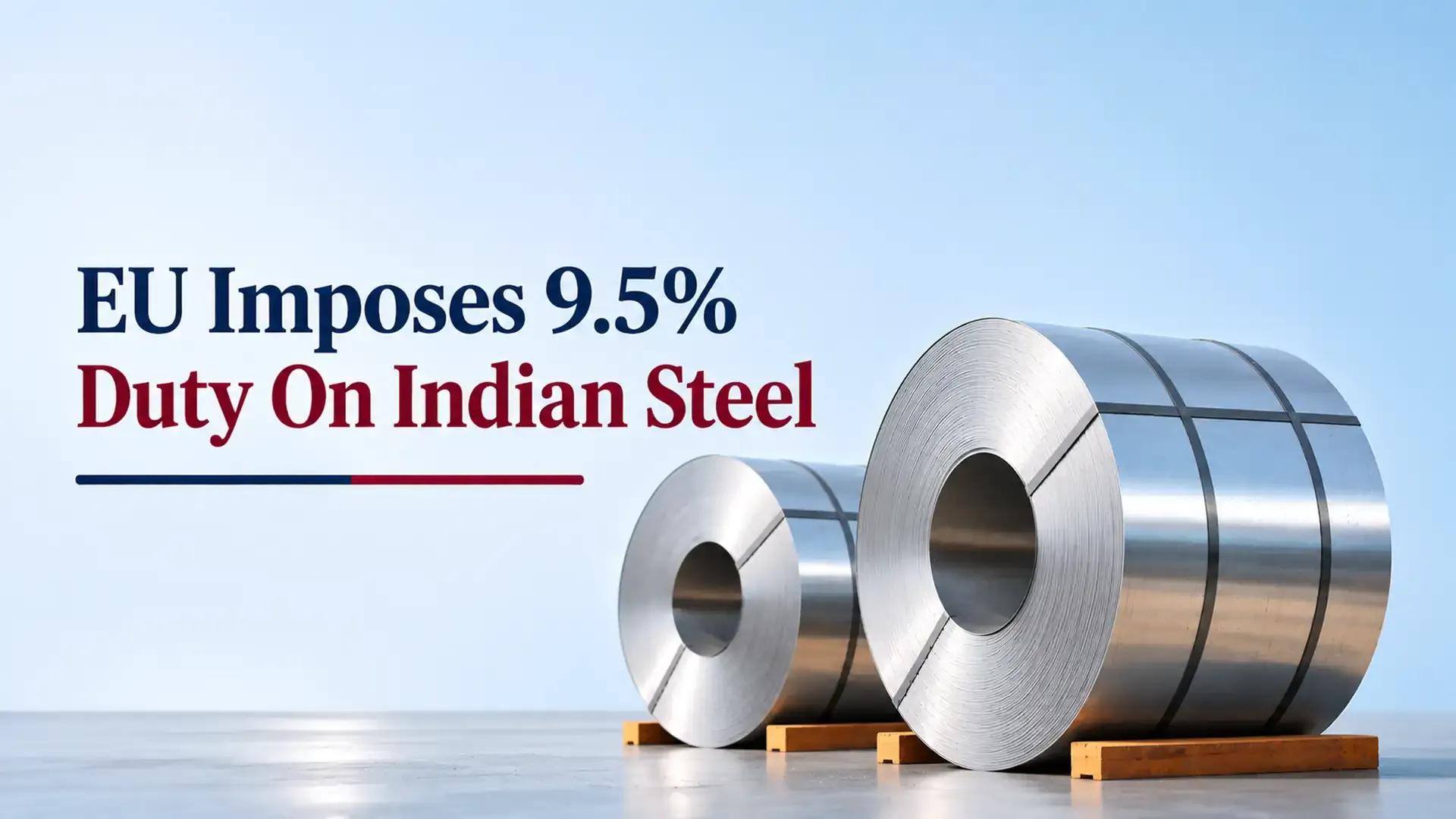
JSW Steel and Tata Steel shares will be in focus on Tuesday, November 17, 2026, after the European Union imposed a 9.5% anti-dumping duty on certain cold-rolled flat steel products imported from India. The duty, announced by the European Commission on Monday, November 16, takes effect today and covers Indian producers including JSW Steel, JSW Steel Coated Products and Tata Steel.
The European Commission imposed the duty following an investigation into steel imports from India, Japan, Taiwan, Türkiye and Vietnam. The investigation found that certain cold-rolled steel products from these countries were being sold in the European market at prices considered unfairly low.
India faces a 9.5% duty, while the levy on Japanese steel imports stands at 27.9%. Taiwan faces duties ranging from 20.7% to 27%, Türkiye between 3% and 7.8%, and Vietnam 16%.
The decision affects a category of steel used in automobiles, household appliances, construction and other manufacturing activities. It does not apply to every type of steel exported from India.
The European Commission said the EU market for cold-rolled flat steel products is worth approximately €23.2 billion. Imports from India covered by the investigation were valued at €282 million, making India one of the five exporting countries affected by the decision.
For JSW Steel and Tata Steel, the immediate concern is the additional duty on the specified products entering the European market. The financial impact will depend on the volume of affected exports and the extent to which the additional cost can be passed on to customers.
Why Has the EU Imposed a 9.5% Duty on Indian Steel?
The European Commission said its investigation found evidence of dumping in cold-rolled flat steel imports from the five countries.
In India’s case, the Commission also examined the impact of government measures on domestic iron ore prices. It concluded that these measures had affected the cost of a key raw material used in steel production.
The regulator used this finding while assessing whether Indian steel products were being exported to the EU at unfairly low prices.
The investigation followed a complaint from European steel industry association Eurofer in 2025. The association had raised concerns about the impact of low-priced imports on steel producers within the European Union.
The European Commission said the measures were intended to address unfair trade practices and protect domestic manufacturers.
What Does the EU Duty Mean for JSW Steel and Tata Steel?
JSW Steel and its subsidiary JSW Steel Coated Products are among the companies specifically covered by the investigation. Tata Steel’s Indian operations are also affected by the duty on eligible exports.
The additional levy could make Indian cold-rolled steel more expensive for European buyers, potentially affecting export orders and price competitiveness.
However, the extent of the impact on JSW Steel and Tata Steel cannot be determined from the tariff rate alone. It will depend on the companies’ sales of the affected products to the EU and their ability to absorb or pass on the duty.
Tata Steel also has manufacturing operations in Europe. Steel produced within the EU is not subject to the import duty imposed on products originating in India and the other countries covered by the investigation.
The Indian Steel Association has objected to the European Commission’s assessment, questioning the methodology used to determine dumping margins for Indian steel exports.
The latest trade restrictions come at a time when Indian steel producers are dealing with changes in global trade policies and import barriers across major markets.
JSW Steel and Tata Steel shares will be watched when Indian stock markets open on November 17, as investors assess the implications of the new EU duty for the companies’ export businesses.
This article is for informational purposes only and should not be considered investment advice from Kotak Neo. For compliance T&C and disclaimers, Visit www.kotakneo.com/disclaimer
About the Author

Rochelle Britto
Rochelle Britto has spent 8+ years decoding India's markets, businesses, and consumer economy, reporting for ET Prime and Times Internet along the way, covering the stories behind the numbers.
A Mumbai native and perpetual planner of the next holiday, she stays far, far away from the eternal question, “Where are we going next?” When she's not chasing headlines, she's chasing new cultures, open roads, and a bit of quiet in nature.
Right Tools, Rich Insights

Latest News
- 1,032 Views| 17 Nov 2026
- 1,082 Views| 17 Nov 2026
- 1,091 Views| 16 Nov 2026
- 1,040 Views| 16 Nov 2026
- 1,092 Views| 16 Nov 2026
- 1,066 Views| 16 Nov 2026
- 1,001 Views| 16 Nov 2026
- 1,002 Views| 16 Nov 2026
- 1,048 Views| 16 Nov 2026